
A tailor-made strategic consulting session for Mwanga Millers: discover their cross-feedback with EPPIC Conseil
The Farm’Innov acceleration programme is currently supporting 14 Kenyan agri-food companies on their path to innovation and success through a tailor-made 10-month support programme, which will run until April 2026. It includes immersion visits in France, consulting services and training provided by French experts from the Valorial network, as well as a number of Kenyan experts.
Mwanga Millers (Kenyan milling company specialising in maize and wheat flour) has benefited from personalised support from EPPIC Conseil (French consultancy firm specialising in processes and products for the cereal industry). Here is their cross-feedback on this consulting service.
Farm’Innov:
“You took part in a consulting provided by EPPIC Conseil in the framework of the Farm’Innov Acceleration Programme. Can you share what you studied with the consultant? And what did you gain from it?”
Philip Marete, Quality Assurance Manager, Mwanga Millers:
“From the training I learnt the best approach to address the issue of mycotoxins is from the farm to when the product reaches the end user. On the farm, its good to ensure farmers have the correct information about the best farming practices, especially the post harvest handling of raw material. During processing, various check points must be put in place to monitor the quality of the raw material and the processed products. After the product leaves the plant, its advisable to monitor the products to check if the data matches the records obtained during processing.
Drying is another efficient way of ensuring the growth of fungi is kept at its minimum. This is by the use of driers which may be solar or electricity powered facilities. Drying reduces the moisture content that is one key factor that promoted the growth of fungi.
Storage is the next key area of concern and the best way to store grains is by using silos. Some of the methods used like the use polypropylene sacks encourage the growth of fungi.
Moreover, its good practice to take random samples and test for mycotoxins at independent laboratories to check if the results are in harmony with the records obtained from the factory laboratory.
The other topic of interest was learning that, wheat can be milled into different types of flour, each for a specific application. Additionally, since gluten allergy affects a significant part of the population, a variety of gluten free wheat (black wheat) is available, and this eliminated this problem. We view this as available areas for us to explore in order to reap the benefits.”
Farm’Innov:
“How do you intend to implement the advice and recommendations shared during the consultancy mission within your company?”
Philip Marete, Quality Assurance Manager, Mwanga Millers:
“First, I plan to establish additional quality control checks especially when the product is out in the market.
Additionally, I will explore ways of making it possible for information about best farming practices to reach as many farms as possible.
Moreover, and we have already kicked off discussions, I target to introduce the technology of drying, ideally, solar since it is more feasible compared to electricity run driers, for reducing moisture levels in grains as a way of controlling mycotoxins.
Furthermore, grain storage is another area that I will work on by replacing the use of sacks with silos. This will also play a crucial role in reducing contamination as well as minimize the growth of mycotoxins producing fungi.
Lastly, all the new measures that will be introduced will require sufficient record keeping for monitoring purposes inorder to check if they are effective, for future improvements as well as be utilized in decision making processes.”
———-
Farm’Innov:
“You took part in a module of the acceleration programme. What did you gain from it?”
Pierre-Antoine Chevaleraud, Consultant specialising in the milling industry, EPPIC Conseil:
“This programme first introduced me to the Valorial community and its partners, a dynamic, professional group dedicated to the success of its ecosystem with dynamic people and modern tools. In addition, I improved my skills-sharing techniques and my knowledge of the Kenyan ecosystem, its players, its dynamics and its opportunities. I enjoy feeling useful by providing precise answers tailored to the needs of my interlocutors. That is my job, and customer satisfaction is my greatest reward.”
Farm’Innov:
“How do you plan to use it in your activities?”
Pierre-Antoine Chevaleraud, Consultant specialising in the milling industry, EPPIC Conseil:
“I aim to capitalise on these two points to continue building my network and bringing value to my partners, whether remotely or on site. Capitalise on the success of this partnership with Valorial and on customer satisfaction by communicating about them. I will continue to provide assistance according to the needs and wishes of the Kenyan miller, with a possible trip. This acceleration was definitely mutually beneficial; for me, it was a source of progress and motivation.”
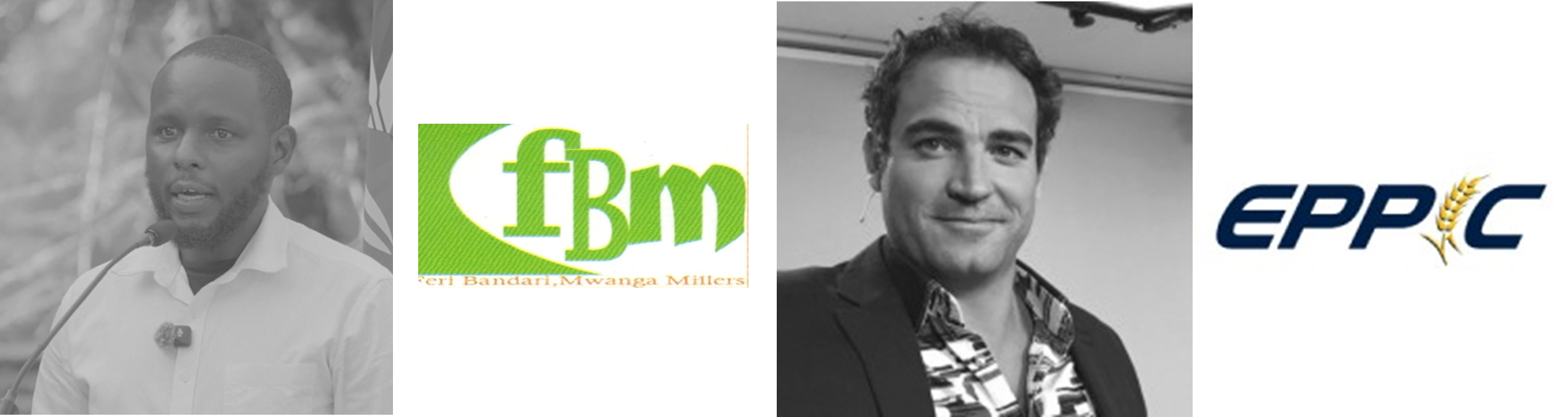
Mwanga Millers / Philip Marete
EPPIC Conseil